
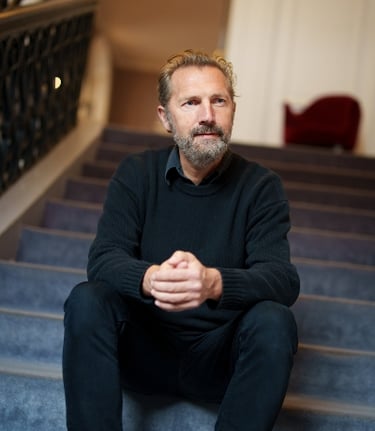
Laurent Van Lancker both studied Film and Anthropology, and holds a PhD in Audiovisual Art. He is Professor in Audiovisual Anthropology at Aix-Marseille University, where he started a research group on “Alternative Narrative Ethnographic Forms”. He co-founded SIC – SoundImageCulture project lab. He made fifteen films (experimental, documentaries and fictions) and won nine awards. His early documentary works explored social and religious themes. Followed by a series of short works called 'Experimental Ethnographies'. Lately, he made three long-feature films around migration themes. His works draw on various modes: Collaborative, Hybrid and Sensory cinema. They propose a dialogue between ethics and aesthetics, poetics and politics.
Laurent Van Lancker
Professor in Audiovisual Anthropology - Filmmaker - Anthropologist - Researcher
Laurent's projects:
Laurent's research on Alternative Narrative Structures as Worldings proposes to look into the plurality of narrative forms beyond the theoretical canonical template of most film scripts.
The classical three-act, hero’s journey structure is embedded in an occidental, evolutionist, linear paradigm, but has pervaded the world and is now globally setting the model of cinematic structuring.
The standard narrative structure propagates a hegemonic worldview that does not reflect the diversity of cultures and worldmaking perceptions. As such the canonical narrative structure is epistemologically coercive and creating a formatted system of thinking and sensing, that does not take into consideration many aspects of life or ways of life.
Contemporary non-Western filmmakers offer a plurality of perspectives, methods of structuring film narratives. They propose concrete emancipatory, subversive film practices that not only undermine hegemonic or national dominant narrative structuring, but moreover open the possibilities of diverse, inclusive, speculative narrative forms that also articulate other worldviews and cultural epistemologies.
Co-directed by Petna Ndaliko Katondolo and Laurent Van Lancker
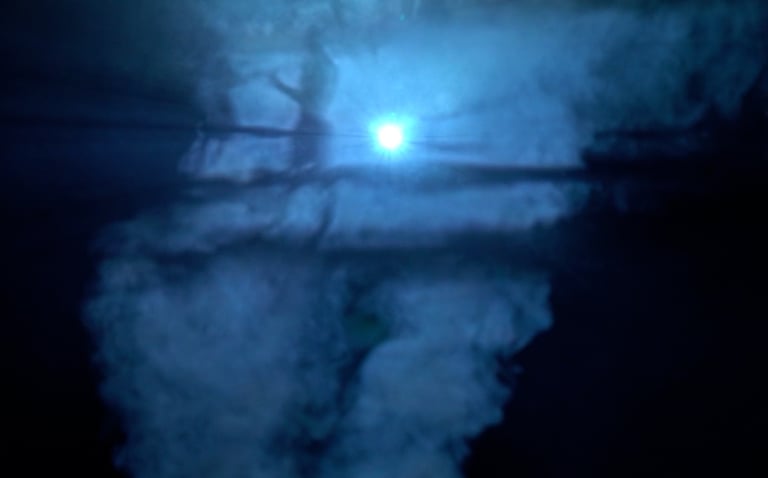
Cutting, slicing, dismembering of the intersubjective relations between cultures, humans and non-humans has been part of the colonial project, which had his epitome in the Berlin Conference of 1885. Through ancestral ecology and ritualisation of sharing practices, this film evokes the need to re-member in order to remember the disrupted invisible lines. To decompose the colonial gazes, a multitude of textures, dreams and disorientation propose to recode aesthetics through an ejo lobi narrative form.
Production Yolé Africa et Polymorfilms.
Selection Berlinale'76 Forum Expanded
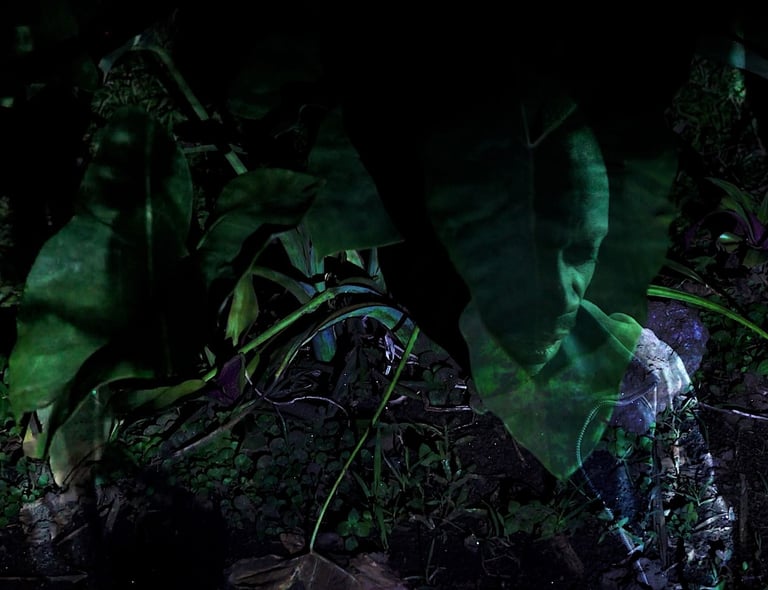
Backfeed is a reversed cinematographic feedback, since its addressee is an absent mad master. Feedback is a filmic method introduced by Jean Rouch inviting filmmakers to screen their films back to the people who were filmed and allow them to criticize your representation of them. It is a way for ethnographical cinema to go beyond written texts of the represented cultures. The film moves from a personal analogue archive to the use of AI to generate an imaginary encounter between me and the deceased Rouch, allowing for a speculative feedback on this film.
Backfeed draws on a 1994 audio archive, in which Jean Rouch explains to me, then a film studies student, the feedback technique and other ethnographic film methods. By editing this assertive discourse with superimpositions of his and my own films filmed in West-Africa, I critically question what still resonates or separates our cinethnographic practices.
Production by Polymorfilms
ANFAA - IDEAS/MMSH
5 rue du Château de l'Horloge
13090 Aix-en-Provence, France









Copyright © All rights reserved